Showing posts with label EPCOT 1939. Show all posts

Tuesday, December 26, 2006

EPCOT 1939 - Part Eight: A Slightly Smaller Universe of Energy

We're a few weeks overdue, so what do you say we jump in our time machine and venture back to that particular World’s Fair we’ve come to call EPCOT 1939.

The universe of energy was a much smaller entity in 1939. While automobile manufacturers were represented in three major pavilions and dominated the 1939 New York World's Fair transportation zone, oil companies were consolidated to the Petroleum Industry Exhibition and relegated to one building in the Production and Distribution Zone.

Sponsored by eighteen different companies, the Petroleum Exhibit was a generally modest endeavor compared to many of the Fair’s other attractions. The official Guide Book of the New York World’s Fair reflected the exhibit’s lack of flair with the following fairly brief and uninspired description:

Plainly land marked by a towering oil derrick in actual operation, the Building (Voorhees. Walker. Foley & Smith, architects; Gilbert Rohde, designer) fronts on the Avenue of Pioneers. Shaped like an equilateral triangle, the structure rests on four huge oil tanks, its metal walls rising in flaring tiers. Four large murals by William T. Schwarz decorate the inner walls of the Great Hall of Industry, each depicting respectively one phase in the story of Petroleum — Production, Transportation. Research and Refining. Here on a mammoth stage a motion picture in technicolor, its actors three-dimensional puppets, portrays the importance of petroleum in man's daily life. The Petroleum Garden on the roof is featured by an animated map on which miniature oil derricks depict the growth of oil production since 1860. A model of an oil refinery demonstrates the most up-to-date refining methods. Sponsored by fourteen major oil companies, the Exhibit shows how the industry has made possible and contributed to the advance of civilization during the past 80 years.

The subject of energy was pretty much as dry then as it was at EPCOT Center in 1982, and a certain amount of window dressing was required for both to create interesting and entertaining presentations. At EPCOT, animatronic dinosaurs, sprawling theater cars and snappy songs generally countered the Universe of Energy pavilion’s mostly low key films and Exxon sponsored public relations. Lacking the sophistication and flare of late 20th century technology, the Petroleum Exhibit had to settle for a motion picture called Pete Roleum and his Cousins. And what an incredibly weird bunch of characters they were.

Animated oil droplets tell the story of petroleum production in a disjointed and often extremely strange series of vignettes, ending with a chorus line musical number that is both bizarre and more or less incomprehensible. This is partly due to the fact that a person at the exhibit interacted with the film's narrator, and those scripted lines are absent from the film.

What makes Pete Roleum somewhat notable is that the stop-motion puppetry was created by silent filmmaker Charles Bowers. Bowers, largely unknown today, was a pioneer in stop-motion special effects photography during the mid to late 1920s. He was famous at the time for two reel features that incorporated his innovative special effects with the typical slapstick antics that hallmarked the comedies of the day. He faded from the movie business in 1930, only to resurface nearly a decade later, assisting director Joseph Losey in the making of Pete Roleum. Bowers also provided the film’s narration.

It was an odd way of promoting the virtues of energy production back in 1939. But then, here it is the 21st century, and Epcot’s presentation of energy innovations is communicated via the combination of a sitcom star, a kids’ TV program host, and a popular game show. Maybe Pete Roleum and his Cousins weren’t all that strange after all.

Monday, November 27, 2006

EPCOT 1939 - Part Seven: Robots of Future Past

What would any vision of the future be without robots? EPCOT Center featured a couple during its first decade, and likewise, a mechanical man was one of the more popular attractions at the 1939 New York World’s Fair.

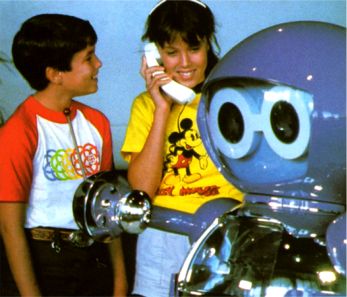
At EPCOT, SMRT-1 entertained guests as part of a number of activity islands at EPCOT Computer Central in Communicore East. Small, round, purple and cute would be the best way to describe the little robot, who interacted with visitors by playing simple guessing games via phone hookups.

Just outside Communicore East, another little robot could be found on occasion. Gyro stood just under 5 feet tall and weighed 150 pounds. Operated by remote control, he would perform twenty minutes shows throughout the day.

While SMRT-1 and Gyro were pretty state-of-the-art for the 1980s, the concept of an interactive robot was nothing new. An example was present and exceptionally popular at Flushing Meadow’s World of Tomorrow back in 1939. Elektro was a robot’s robot, not at all cute and endearing like his EPCOT counterparts, he held to the more traditional image of robots, as perpetuated by the science fiction pulp magazines of the day--big, slow and lumbering.

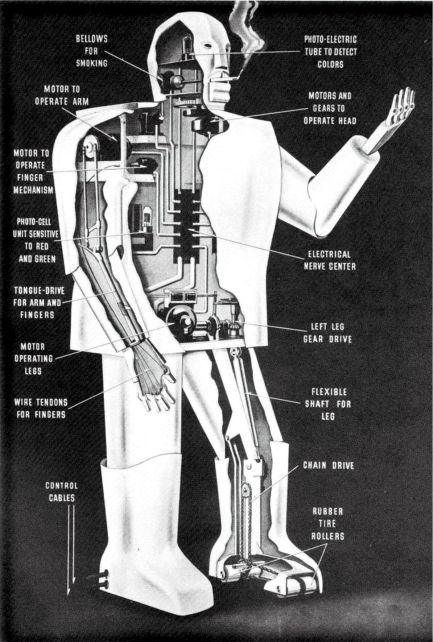
Elektro was a resident of the Westinghouse pavilion in the Fair’s Production and Distribution Zone. He was manufactured by Westinghouse in a plant in Mansfield, Ohio. He stood seven feet tall and weighed 300 pounds. As part of his twenty minute presentation, he would walk, move his hands and arms, smoke cigarettes and speak by means of a 78 rpm record player. During the Fair’s 1940 season, he was joined by Sparko, a robot dog who could speak, sit and beg.

Elektro made quite impression on fairgoers and entered into the popular culture of the era. Following World War II, Westinghouse used him to promote appliances, and he was a static display at Palisades Park in Oceanside, California for a number of years in the late 1950s and early 1960s. He appeared in the 1960 film Sex Kittens Go to College.

Veteran comic book writer Roy Thomas made Elektro a supporting character when he reintroduced the Justice Society of America to DC Comics readers in the early 1980s. Thomas created a spin-off team know as the All Star Squadron that headquartered in the Fair’s Trylon and Perisphere buildings. Their robot butler Gernsback was clearly based on the Elektro robots.

Up next for EPCOT 1939: The Universe of Energy as it was back in 1939. We’ll take a look at the Petroleum Industry Exhibition and their mascot Pete Roleum.

Sunday, November 12, 2006

EPCOT 1939 - Part Six: The Food Zone

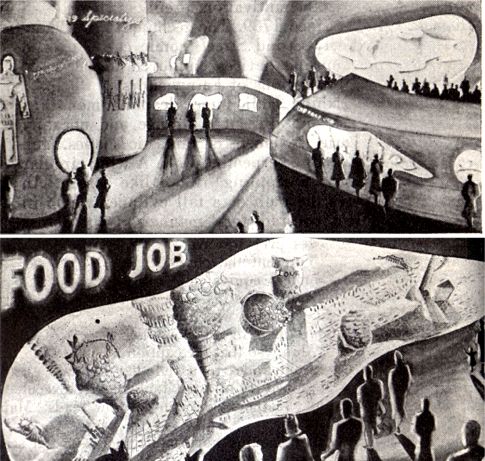
People were certainly “living with the land” in 1939, and the Food Zone was a popular destination for Fairgoers at New York World’s Fair of that same year. The Focal Exhibit of the Food Zone was called “Miracle of Modern Food.” While not in any way similar to any of the future EPCOT Center Land pavilion attractions, it spirit and message ultimately reflected the same themes of “Listen to the Land” and “Symbiosis,” The Land’s 1980s era attractions.

Let’s check our Official Guidebook for a quick description:

Though it deals with humble, commonplace things like "bread and butter," the Food Show is high and amazing entertainment. Comprehensive and dramatic, the Exhibit illustrates the progress made in the cultivation, preparation, , processing and distribution of food since 1789. The techniques of Coney Island, the atmosphere of Forty-second Street, comic cartoons, and "slapstick"' are among the amusing devices employed to stage the "Miracle of Modern Food" for millions of Fair visitors.

In describing the show’s climax, the guidebook conveys a message that would be echoed by its Future World counterpart in 1982:

A startling anticlimax to the show is the exhibit "the challenge to the future," which is housed in a huge chamber under the ovoid itself. Here the walls and ceilings impress you with their grave message of food questions yet unsolved. Springing from the shadows, newspaper headlines and photomontages graphically depict a score of acute food problems darkening man's future. As the show ends, you turn away reflecting on another unfinished job for the "World of Tomorrow." Yet every unfinished task is a challenge—an opportunity for an additional achievement in man's progress.

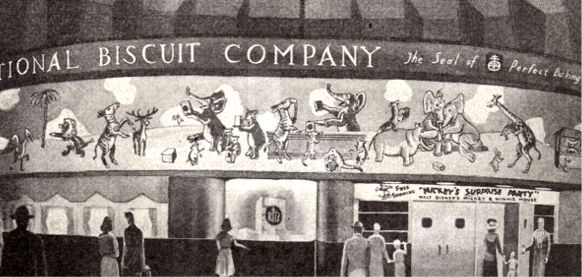
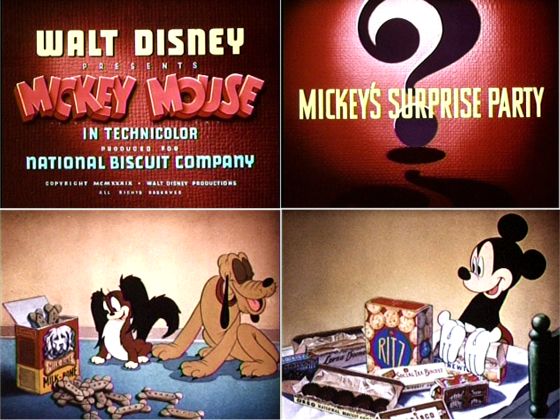
The Food Zone did host Walt Disney’s most direct connection to the Fair. Let’s take a look at the Guidebook’s entry for the National Biscuit Company’s (more familiar to people today as Nabisco) exhibit:

A specially produced Walt Disney motion picture, entitled Mickey's Surprise Party. is the outstanding feature of the Exhibit. Fair visitors are invited to see this amusing film in an air-conditioned theatre. The Disney picture is in technicolor and features many of the well-known "Mickey Mouse ' characters.

The best line of the film: "Oh Mickey--Fig Newtons!"

Mickey's Surprise Party was included as an Easter egg on the Walt Disney Treasures Mickey Mouse in Living Color Volume One DVD set.

Coming next: The Mechanical Marvel of the Fair and its considerably smaller and cuter 1982 counterpart.

Wednesday, November 01, 2006

EPCOT 1939 - Part Five: Highways and Horizons


It was the talk of the 1939 New York World’s Fair. It had the longest lines of any attraction. It was state-of the-art in design and execution. It was the centerpiece of the General Motors Building. It was Futurama.


In EPCOT 1939, Futurama was to fairgoers what Horizons was to Future World guests in the mid-1980s. Just as Horizons’ travelers were transported into the 21st century, their 1939 counterparts were taken on a scenic journey twenty years ahead to America in the year 1960. Appropriately, the name General Motors gave to its seven acre exhibit was “Highways and Horizons.”

Once again, our handy official guidebook provides a much better description than I ever could:

"In 600 moving chairs, each equipped with a sound device which serves as a private guide on the Aladdin-like trip, visitors tour a vast miniature cross-section of America as it may conceivably appear twenty years or more from now."

The ride mechanics foreshadowed Epcot attractions like Spaceship Earth and Horizons, especially in regard to the vehicles’ onboard audio.

"Covering an area of 35.738 square feet, the '"futurama" is the largest and most realistic scale-model ever constructed. As visitors in the moving chairs tour this "futurama" they experience the sensation of traveling hundreds of miles and viewing the scenes from a low-flying airplane. As they travel on several levels of the building in their magic chairs, they view a continuous animated panorama of towns and cities, rivers and lakes, country and farm areas, industrial plants in operation, country clubs, forests, valleys and snowcapped mountains. The "futurama" contains approximately 500.000 individually designed houses; more than a million trees of eighteen species; and 50,000 scale-model automobiles, of which 10,000 are in actual operation over super-highways, speed lanes and multi-decked bridges."


The ride culminated in a shining, tower-filled future metropolis. Through a series of transitions, the magic chairs and their occupants were drawn closer and closer into the cityscape, until they finally hovered above a bustling intersection. The ride ends but the amazement did not. Upon exiting their magic chairs, visitors walked onto a full scale reproduction of the street intersection they had just encountered in model form. It was a total “wow” moment.


The guidebook describes how the these imaginary city streets of the future formed the overall architecture of General Motors Building:

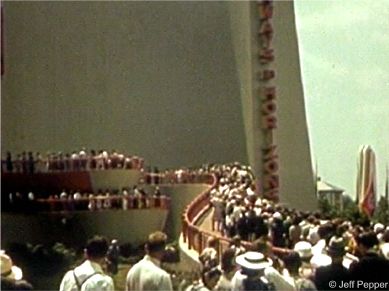
"Spacious open-air terraces with several hundred chairs for visitors' comfort encircle two-thirds of the structure. Actually, "Highways and Horizons" is not one building, but consists of four towering structures (four to six stories in height). Located on the four corners of an imaginary and spectacular, full-scale street intersection of 1960, the four buildings are joined into an overall exhibit structure by broad, elevated pedestrian sidewalks, which extend for a full city block in two directions. This open-air spectacle forms the center section of the Exhibit and at night is brilliantly illuminated by a battery of floodlights”


The buildings at the four corners of intersection actually contained additional exhibits and attractions. These included a 650-seat theater that housed the Casino of Science, the World Horizons exhibit that focused on GM’s overseas operations through a series of animated displays, and a full scale “x-ray” car constructed of “plexiglass,” an amazing new transparent plastic.

Yes, in design, theme and even name, the General Motors Building and Futurama, found themselves reborn at EPCOT Center on October 1, 1983.

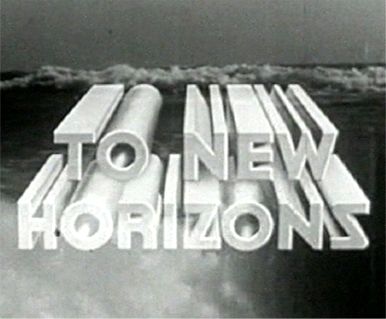
Interestingly, GM produced a short film in 1939 to promote Futurama. Its title:


Up next: As previously promised, a quick look at the other buildings in the Transportation Zone, then over to the Food Zone where we'll experience Living With the Land circa 1939.

Saturday, October 28, 2006

EPCOT 1939 - Part Four: The Road of Tomorrow

Okay folks, it’s a beautiful sunny day back here at the 1939 New York World’s Fair. Let’s continue our tour of the Transportation Zone . We’re going to leave the Chrysler building and walk across the Avenue of Transportation to the Ford Exposition.

While the Focal Exhibit at the Chrysler pavilion, like Epcot’s World of Motion, told the story of the history of transportation, Ford’s main attraction, the Road of Tomorrow, drew parallels to Motion’s successor--Test Track.


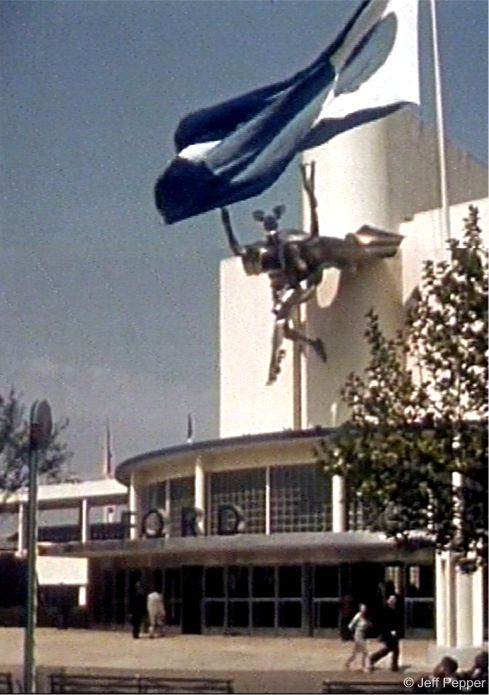
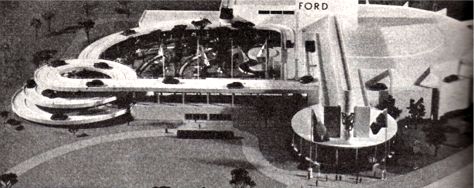
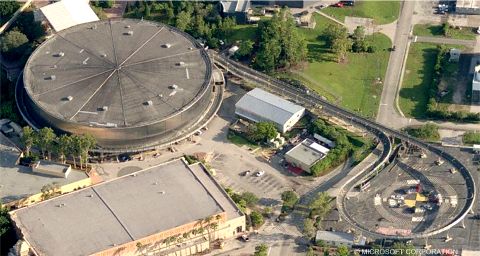
A stainless steel sculpture of the god Mercury towered high above the entrance to the Ford building, representing one of the four Ford brands that also included Lincoln and Zephyr. But the more striking feature of the building’s exterior was the half-mile spiral ramp on which visitors rode in Ford-model vehicles as a part of the Road of Tomorrow attraction. The ramp surrounded the Garden Court, a beautifully landscaped courtyard where fairgoers could partake in a picnic lunch, listen to a musical performance, or just relax and people watch.

Let’s take a look at our guidebook for a quick description of the exhibits inside:

The "Exposition" has four main divisions: the Entrance Hall, the Industrial Hall, the Garden Court, and "The Road of Tomorrow." Each of the first three demonstrate in graphic style some significant phase of the company's work, showing how mass production of automobiles at moderate cost has contributed to a new way of life. The Entrance Hall is dominated by a series of striking exhibits. The first car Henry Ford built will be seen with current models of Lincoln-Zephyr, Mercury and Ford V-8 cars. "Everytown" is a large three phase map activated on a series of synchronized prisms, depicting the changes the automobile has wrought in our country. A huge activated mural by Henry Billings shows how the basic sciences are utilized by industry. Outstanding in the adjoining Industrial Hall is the "Ford Cycle of Production.'' A revolving turntable 100 feet in diameter, it contains 87 exhibits showing the progression of raw materials from earth to finished cars. Industrial Hall also offers various exhibits demonstrating Ford manufacturing methods.

While not sharing the same theme, these exhibits were very similar in design to the Fountain of Information display and the Age of Information animated mural that were a part of Communicore West’s FutureCom area at EPCOT Center.

The popular highlight of the exposition was The Road of Tomorrow, demonstrated by the long queue lines that overlooked the Garden Court. Here’s how our trusty guidebook described the attraction:

From a broad mezzanine you embark on your wondrous trip over '"The Road of Tomorrow." The winding course takes you through a tunnel lined with murals depicting ultra-modern highway construction, circles the top of Industrial Hall and through still another tunnel high in the nave of Entrance Hall. Descending at last to the second floor level, you circle Garden Court and return to the mezzanine and the end of a thrilling and delightful adventure.

Granted, this “thrilling adventure” did not rival the 65 mph speed of Test Track, but it was certainly entertaining in its day. In fact, Test Track would have been far cooler had the speed ramp circled a public area much the way “Road” surrounded the Garden Court. Instead, it exposes guests to some fairly unattractive backstage scenery.

Up next: In Part Four, we’ll take a quick look at some of the other Transportation Zone Buildings, then make our way over to General Motors and Futurama.

Thursday, October 26, 2006

EPCOT 1939 - Part Three: Chrysler Motor's World of Motion

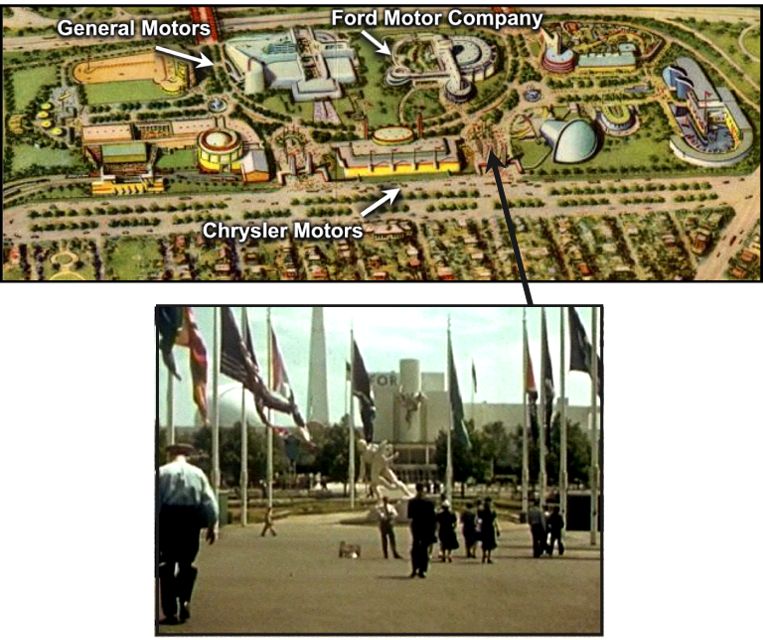
In 1939, the most readily accepted hallmark of progress was the automobile. Therefore, it’s not surprising that the Transportation Zone was the most popular destination at the 1939 New York World's Fair. Many of the longest lines at the Fair were to exhibits and attractions belonging to General Motors, Chrysler Motors and the Ford Motor Company. And many of these crowd pleasers would distinctly foreshadow EPCOT Center attractions created some forty-plus years later.

Looking across the Transportation Zone from the Fair's Corona Gate entrance.

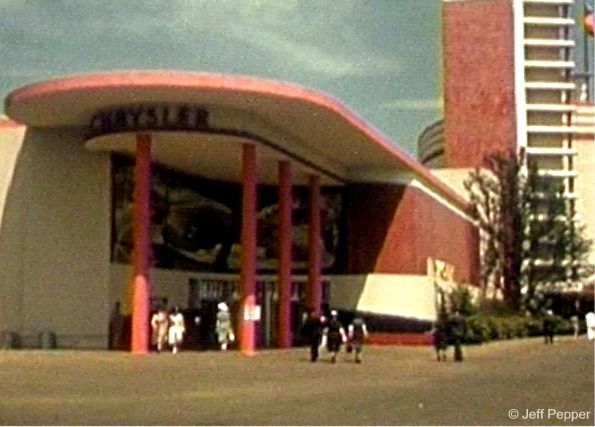
The Chrysler Motors Building was at the forefront of the Transportation Zone and was home to the area’s Focal Exhibit. It embraced the very same theme as EPCOT’s World of Motion--the history of transportation. It however approached the subject with a much more serious tone, and a distinctly different presentation. Let’s flip to page 199 of our Official Fair Guidebook for a description:

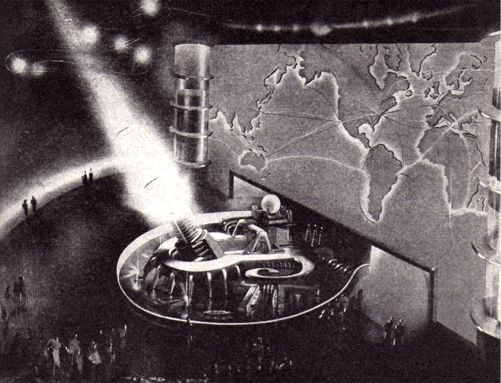
“Within the rotunda of the building, the FOCAL EXHIBIT—-a part of the Chrysler Motors presentation—tells its graphic story of Transportation by means of moving pictures projected upon a great map of the world, and by the "Rocketport," a display that seizes upon your imagination and projects it into the future. The show consists of three parts—The Early Period, The Middle Period, and The Mechanical Period.”

Like World of Motion's cast of animatronics, these periods chronicled the history of transportation from foot and animal power all the way through to the arrival of automobiles and airplanes. The show culminates in the following dramatic finale:


“As the airplane finishes its flight across the screen, lines shoot out and harness the earth with other planets. Twinkling signal lights, the hum of gigantic motors and the warning sound of sirens indicate that the Rocketship is loading passengers for London. You see futuristic liners unloading at nearby docks; sleek trains glide to a stop, automobiles whisk voyagers to the spot, high-speed elevators rise and descend as the Rocketship is serviced for the coming journey. The moment for departure arrives. A great steel crane moves, a magnet picks up the Rocketship and deposits it into the breach of the rocketgun. A moment of awesome silence. A flash, a muffled explosion, and the ship vanishes into the night.”

Another popular attraction at the Chrysler Motors Building was in fact the first Technicolor 3D film ever made. After donning special Polaroid glasses, audiences were entertained by singing and dancing auto parts that magically assembled into a fully built automobile. EPCOT connection? Picture Journey into Imagination’s Magic Eye Theater dropped into World of Motion’s Transcenter.

Other points of interest in the pavilion included the standard showroom of new model Chrysler-made vehicles, and an exhibit featuring a talking car that answered questions, gave interviews and demonstrated its many then high-tech features.

Special Note: Readers of the first two parts of the EPCOT 1939 series may be now asking, this is great, but didn’t you say Futurama was your next topic? Well, yes that was my intention. But when I began to research the Transportation Zone, I realized there was much, much more to cover than just the popular General Motors attraction. Especially considering the numerous other similarities to EPCOT Center that continued to become apparent. Fear not; Futurama, and other elements from the Transportation Zone, are on the way. Stay tuned.

Tuesday, October 24, 2006

EPCOT 1939 - Part Two: Icons Past and Present

Like Spaceship Earth at Epcot, the Trylon-Perisphere Theme Center was the visual centerpiece of the 1939 New York World’s Fair. And in the same manner that Disney uses Spaceship Earth, Cinderella Castle and the Tree of Life as marketing icons for their respective parks, the Fair’s promoters spared no opportunity to brand everything they possibly could with representations of these two very dynamic structures.

Disney established Spaceship Earth as the symbol of EPCOT Center well prior to its October 1982 opening. Nearly every piece of pre-opening publicity material featured the distinct likeness of the giant geosphere.

The New York World’s Fair 1939 Corporation was no different with the Trylon and the Perisphere. The terms “trylon” and “perisphere” were specially created to describe these structures. Two years prior to the Fair’s opening, the dual icons were featured prominently on this “coming soon” poster:

It didn’t stop there by any means. There were few types of consumer products in 1939 that escaped Fair licensing. Furniture, cameras, typewriters, watches, radios, china, and countless other items all carried some type of image or graphic of the Trylon-Perisphere.
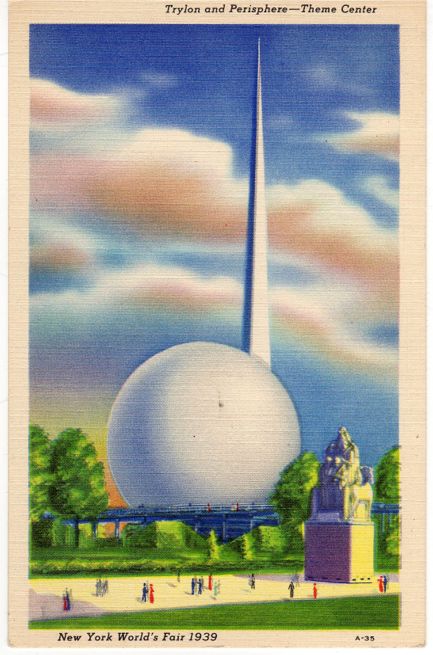
The Trylon-Perisphere Theme Center was dramatic and imposing to say the least. The Trylon stood some 700 feet high while the Perisphere measured 200 feet in diameter. In comparison, Spaceship Earth’s diameter tops out at 165 feet. The following images can give you just some idea of how large these structures were:

Like Spaceship Earth, the Perisphere also housed an attraction. While the Fair did have a zone that was identified with Spaceship Earth’s communication theme, the Perisphere’s resident presentation, Democracity, embraced the fair’s broader theme of “The World of Tomorrow.”

Visitors entered on what was then the longest escalator in the world. At its top, they were deposited onto either one of two revolving balconies that hung suspended over the sphere’s vast interior. Below was a highly detailed model of a city of the future. The Fair’s guidebook provides this description:

“As the interior is revealed, you see in the hollow beneath the sky, "Democracity"—symbol of a perfectly integrated, futuristic metropolis pulsing with life and rhythm and music. The daylight panorama stretches off to the horizon on all sides. Here is a city of a million people with a working population of 250.000, whose homes are located beyond the city-proper, in five satellite towns. Like great arteries, broad highways traverse expansive areas of vivid green countryside, connecting outlying industrial towns with the city's heart.”

In theme and message, though not in presentation, Democracity is most similar to Horizons of all EPCOT Center’s first wave of Future World attractions. But more striking is the miniature city’s uncanny resemblance to models and artwork of Walt Disney’s original vision of his Experimental Prototype Community of Tomorrow, right down to the single imposing skyscraper that tower’s over each concept’s city center. I have never come across any information that documents a visit by Walt to the Fair, but I have to feel it’s likely he attended at some point during its two seasons of operation. One must wonder if he viewed a performance of Democracity, and if he carried away any impressions that later influenced his plans for EPCOT.

Up next in Part Three: Futurama - by far the Fair’s most popular attraction, presented by none other than General Motors, future corporate sponsor of EPCOT Center attractions.

Sunday, October 22, 2006

EPCOT 1939 - Part One: The World of Tomorrow

Over the course of its 25 years, Epcot has often been described as a permanent world’s fair. It’s an interesting, and very accurate reference that is likely lost however, on the vast majority of guests, especially those under the age of fifty, who walk in the shadow of Spaceship Earth every day.

Built as showcases primarily for industries and governments, these fairs and expos have by and large become anachronisms in these early years of the 21st century. People attended these often massive expositions to view the wonders of technological progress and celebrate the accomplishments of the industrial complex. They also sought to bring themselves closer to other peoples and cultures from around the world, by visiting pavilions hosted by numerous nations. The countless media outlets available today have largely rendered world’s fairs obsolete. People need only go as far as their televisions or their computers to be exposed to the latest hallmarks of progress, or to explore distant lands.

Epcot was clearly designed and built around these very same concepts of progress and international cooperation. But its similarities to one fair in particular are striking. While most associate the Disney company, and Walt in particular, with the 1964-65 New York World’s Fair, it is in fact its 1939 predecessor that Epcot most closely resembles. Especially the EPCOT Center that existed from 1982 through the early 1990s.

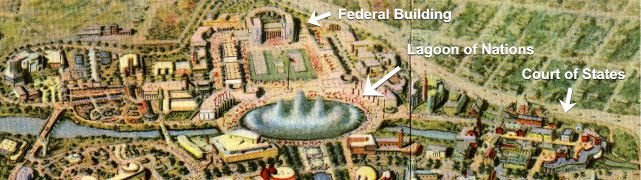
Both 1939 and 1964 World’s Fairs occupied the same location in the Queens borough of New York City. It sprawled over 1,216 acres of former marshland adjacent to Flushing Bay. That’s four times the size of Epcot. An illustration from a 1939 pre-opening guidebook provides an idea of just how large it was:A close examination of this aerial view reveals how Imagineers likely took inspiration from the fair’s extensive layout, when mapping out EPCOT Center. Known as the Theme Center, the Trylon and the Perisphere, like Spaceship Earth for Epcot, serve as the Fair’s focal centerpiece. Immediately surrounding these dramatic icons are seven different zones and focal exhibits, each with a distinct theme: Communication, Transportation, Community, Food, Health, Production, and Science.

Beyond these areas, at the rear portion of the grounds, was the Government Zone. Radiating out from the Lagoon of Nations were over twenty large pavilions featuring the likes of Italy, France, Japan, Great Britain, Brazil and the U.S.S.R. The Hall of Nations surrounded both the lagoon and the Court of Peace, and offered slightly smaller scale pavilions representing an additional forty countries. The nearby Court of States featured pavilions from 22 different states. Centered directly behind the Lagoon of Nations and the Court of Peace was the United States Federal Building, anchoring the area in much the same manner as the American Adventure in World Showcase.
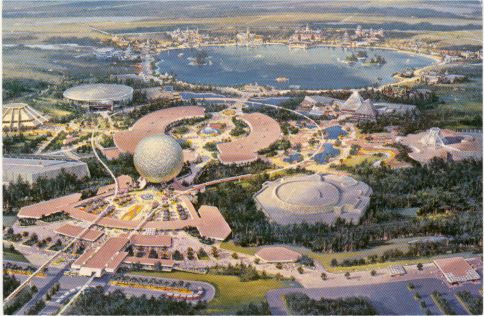
It’s interesting to compare the overall layout of the Fair to this concept art of EPCOT Center, featured on a pre-opening postcard:And the similarities extend well beyond layout and design.

Take for instance the theme of the Fair, as expressed in its official slogan:

“Building the World of Tomorrow with the Tools of Today.”

And then compare this excerpt from Card Walker’s dedication of EPCOT Center--

“Here, human achievements are celebrated through imagination, wonders of enterprise and concepts of a future that promises new and exciting benefits for all. May EPCOT Center entertain, inform and inspire, and above all, may it instill a new sense of belief and pride in man's ability to shape a world that offers hope to people everywhere.”
--to the following statements from the aforementioned Official Guidebook of the New York World’s Fair 1939:

To the millions of visitors the Fair says: “Here are the materials, ideas, and forces at work in our world. Here are the best tools that are available to you; they are the tools with which you and your fellow men can build the World of Tomorrow. You are the builders; we have done our best to persuade you that these tools will result in a better World of Tomorrow; yours is the choice.”

The same forward thinking idealism that EPCOT Center embodied, was very much alive and well in 1939. Sadly, it would soon be dampened by Germany’s invasion of Poland and the onset of World War II.

For Part Two in our EPCOT 1939 series, we will take a closer look at the Perisphere and determine the Epcot attraction it was most similar to. The answer may just surprise you.